Views: 21
In the Mano River Basin spanning Côte d’Ivoire, Guinea, Liberia, and Sierra Leone a quiet but powerful transformation is underway. Women who once organized across battle lines to stop wars are now demanding fiscal justice, constitutional accountability, and ethical governance. From the border markets of Gendema to the parliamentary chambers of Monrovia, women are redefining what leadership looks like in a region still healing from decades of civil conflict, corruption, and institutional fragility.
Their contribution rests on a compelling insight: accountability is not merely a technical exercise in auditing or legal procedure. It requires relational trust, moral courage, and the willingness to make power transparent qualities that women in this region have historically cultivated under the most adverse conditions.
Challenging Fiscal Injustice: The Zac Tax Campaign
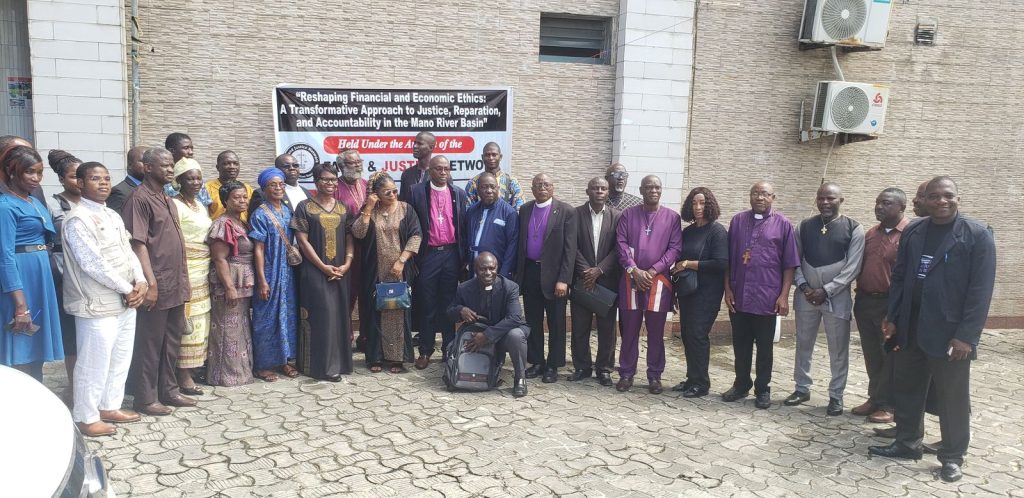
Perhaps no initiative better illustrates the evolution of women’s accountability leadership than the Zac Tax Campaign, launched by the Faith and Justice Network across all four Mano River Union countries. The campaign brings together women, church leaders, lawyers, economists, and civil society actors to confront a uncomfortable truth: the region’s economic disorder is not merely technical but moral .
At the campaign’s 2025 regional conference in Monrovia, over 60 participants challenged unjust tax systems, exploitative fiscal structures, and the illicit financial flows that drain billions from public coffers. The framing is deliberate and powerful, because true accountability requires restitution, not just confession. As Archbishop Jubwe declared, invoking the biblical story of Zacchaeus the tax collector, “Zacchaeus did not just confess he repaid. True justice requires restitution. And until our systems of extraction and exploitation are transformed, peace will remain elusive”.
Women are central to this campaign because they bear the brunt of corrupt fiscal systems. When tax incentives benefit extractive industries while schools remain underfunded, when customs officials extort female traders at border checkpoints with impunity, women absorb the costs in diminished opportunities and eroded dignity. The campaign’s demands equitable and transparent tax systems, abolition of exploitative incentives, and reparation for historical and ecological injustices represent a gendered reimagining of economic governance. This is accountability not as punishment but as restoration because rebuilding trust between citizens and the states that have failed them.
Challenges and the Road Ahead
Despite these gains, significant obstacles remain. The Mano River Basin continues to grapple with what scholars have called “weak state penetration” in borderland areas, where security services operate with little oversight and impunity is routine. Police and customs officials work under such poor conditions lacking salaries, equipment, and infrastructure that extortion becomes a survival strategy. Women who attempt to report sexual assault are often told it is their fault or asked to pay for the stationery to file a complaint.
Moreover, the transition from peacebuilding to accountability requires confronting powerful interests. The Zac Tax Campaign’s call for reparations and the abolition of exploitative tax incentives threatens entrenched elite networks that profit from the status quo. The push for a War and Economic Crimes Court in Liberia which the Faith and Justice Network explicitly supports faces political resistance from those who would be held to account. Yet the trajectory is clear. The women of the Mano River Basin have already accomplished what seemed impossible: ending wars that had consumed a generation. They are now applying the same moral clarity, collaborative leadership, and grassroots organizing to the less visible but equally devastating violence of corruption and unaccountable governance.