
Views: 106
Search Press Releases
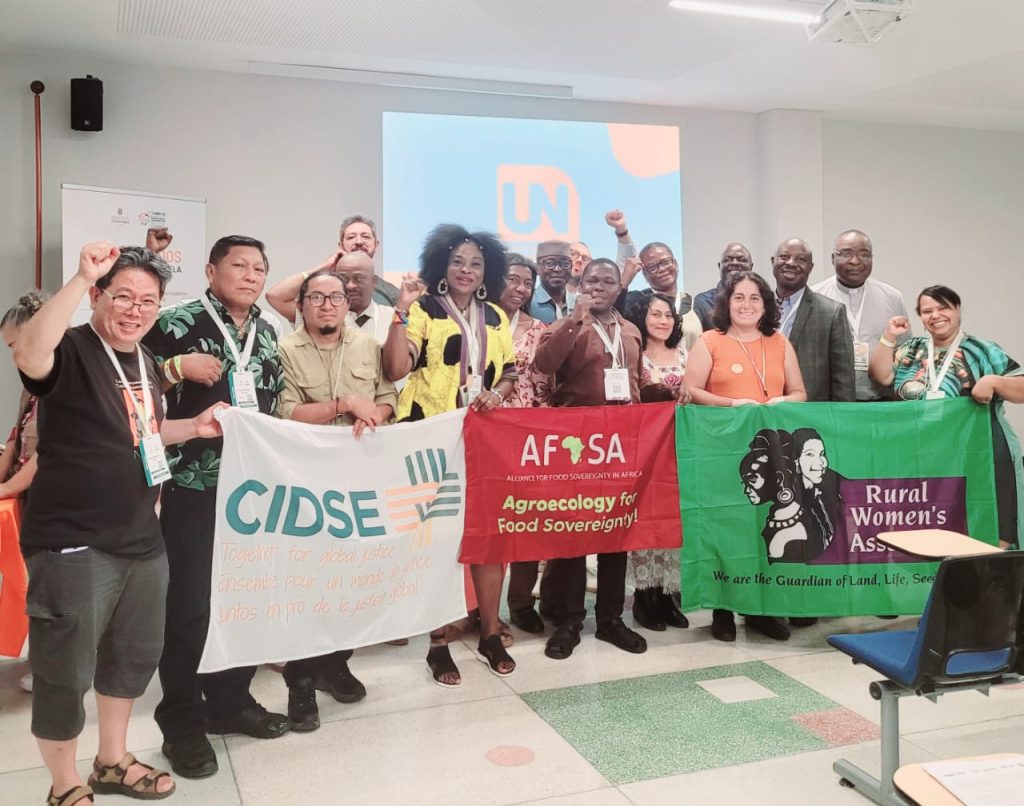
Faith & Justice Network (FJN) Representation at International Conference in Colombia
Dr. Tolbert Thomas Jallah Jr., Executive Director of the Faith & Justice Network (FJN), is attending the Second International Conference on Agrarian Reform and Rural Development+20 (ICARRD+20) in Colombia.
The global conference brings together governments, rural organizations, civil society groups, and other key stakeholders to deliberate on:
Equity in land access, Rural justice, Agrarian reform
Sustainable rural development Dr. Jallah’s participation reflects FJN’s commitment to advancing land equity, social justice, and sustainable development both locally and globally. On February 27, 2026, at the sidelines of the International Conference on Agrarian Reform and Rural Development (ICARRD+20) in Cartagena, Colombia, the Chairman of the Board of Directors of the Alliance for Food Sovereignty in Africa (AFSA) delivered a compelling call to re-center global land governance around collective tenure systems and agroecology.
Speaking during the gathering, AFSA emphasized that collective land tenure systems—where land is owned, managed, or governed by communities rather than individuals—are essential for protecting biodiversity, strengthening climate resilience, and safeguarding cultural heritage.
Collective Tenure: A Stewardship Ethic Rooted in Faith and Culture
AFSA underscored that for many African faith and Indigenous communities, land is not a commodity to be traded, but an ancestral heritage held in trust for future generations. This stewardship ethic encourages:
• Sustainable harvesting
• Forest conservation
• Soil protection
By contrast, privatized land regimes often incentivize short-term profit maximization through logging, monocropping, and land speculation—practices that accelerate biodiversity loss and ecological degradation.
Customary Governance as Conservation Framework
AFSA highlighted that collective systems frequently operate under customary laws that function as effective conservation mechanisms, including:
• Rotational farming
• Protection of sacred forests
• Seasonal restrictions on hunting and fishing
Such traditional governance systems allow communities to manage forests, wetlands, and grazing lands holistically. Rather than fragmenting landscapes into fenced parcels, collective tenure maintains ecological connectivity across territories.
Evidence from multiple African contexts shows that Indigenous and community-managed lands often experience lower deforestation rates than even state-protected areas—demonstrating that conservation is strongest where communities have secure rights and cultural ties to their land.
Bridging Food Sovereignty and Biodiversity Through Agroecology
AFSA stressed that agroecology must be central—not peripheral—to future land governance frameworks.
Agroecology integrates crops, trees, livestock, and local knowledge into diversified food systems. This approach:
• Reduces reliance on chemical inputs
• Protects soil organisms
• Safeguards water systems
• Enhances nutritional diversity
By aligning food production with ecological processes, agroecology becomes the operational arm of biodiversity protection.
Climate Resilience in an Era of Uncertainty
In the face of intensifying droughts and floods due to climate change, agroecological systems provide resilience through:
• Crop diversity
• Agroforestry
• Soil regeneration
These practices strengthen carbon sequestration while restoring degraded landscapes, ensuring both environmental sustainability and food security.
A New Vision for Land Governance
AFSA’s advocacy campaign calls for transformative policy shifts that:
• Legally recognize customary land rights
• Provide incentives for regenerative agricultural practices
• Redirect subsidies away from industrial monocultures
• Integrate agroecology into national agricultural policies
The organization urged policymakers to move beyond narrow yield-per-hectare metrics and instead prioritize:
• Ecosystem health
• Nutritional diversity
• Social equity
• Carbon sequestration
A Governance Philosophy for the Future
In closing, AFSA affirmed that agroecology is not merely a farming technique—it is a governance philosophy. It redefines land as a living system rather than a production unit.
If collective tenure protects biodiversity structurally, agroecology operationalizes that protection in practice.
The message from Cartagena was clear: Protect our Land. Restore our Soil.
FJN Executive Director Dr. Rev. Tolbert Thomas Jallah Jr. Speech at the AFSA Champions Collective Land Tenure and Agroecology at ICARRD+20 in Cartagena, Colombia
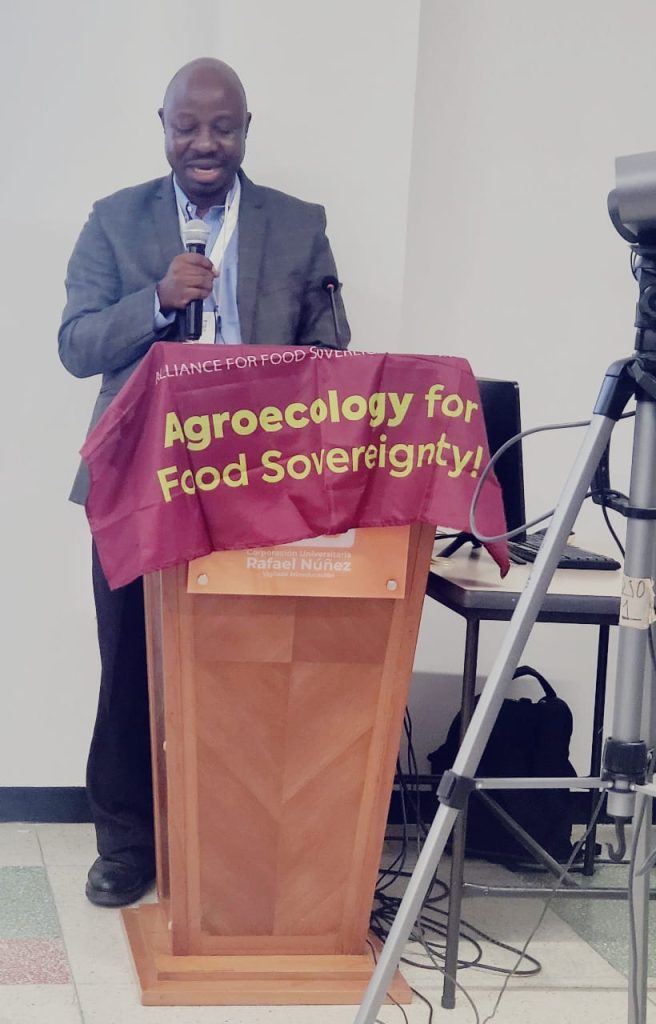
Good morning distinguished guests, partners, farmers, youth leaders, and friends of AFSA.
Today, as Chairman of the Board of the Alliance for Food Sovereignty in Africa (AFSA), I am honored to launch our new campaign: “Protect Our Land, Restore Our Soil.”
Land is more than a resource. It is our heritage, our identity, and our future. Across Africa, our soils feed our families, sustain our economies, and connect generations. Yet today, land degradation, extractive practices, climate change, and land grabbing threaten the very foundation of our food systems.
When soil is degraded, food becomes scarce. When land is taken or misused, communities lose dignity and security. Protecting our land is not optional — it is essential.
This campaign is a call to action. We call on governments to strengthen land rights and protect smallholder farmers.
We call on communities to embrace agroecology and regenerative practices that rebuild soil fertility.
We call on young people to see agriculture not as a last resort, but as a powerful pathway to innovation and resilience.
And we call on all partners to invest in systems that nourish both people and the planet.
Healthy soil is living soil. It holds water during droughts, stores carbon, supports biodiversity, and produces nutritious food. When we restore our soil, we restore hope.
At AFSA, we believe that Africa’s future lies in food sovereignty — in empowering communities to control their land, seeds, and knowledge. This campaign strengthens that commitment.
Let this be more than a launch. Let it be a movement.
A movement to protect what sustains us.
A movement to restore what has been depleted.
A movement to ensure that future generations inherit land that is richer, stronger, and more abundant than we found it.
Together, we protect our land.
Together, we restore our soil.
Together, we secure Africa’s future.